Evolution
Format
Card show
RTP
97.02
Top multiplier
n/a
Wheel segments
n/a
Betting window
n/a
Table min
n/a
Table max
n/a
Loading live stats
Dead or Alive: Saloon is a live casino game from Evolution, released in 2022, which takes you into a Wild West saloon for a game that's essentially about predicting which ordinary playing card will appear first.
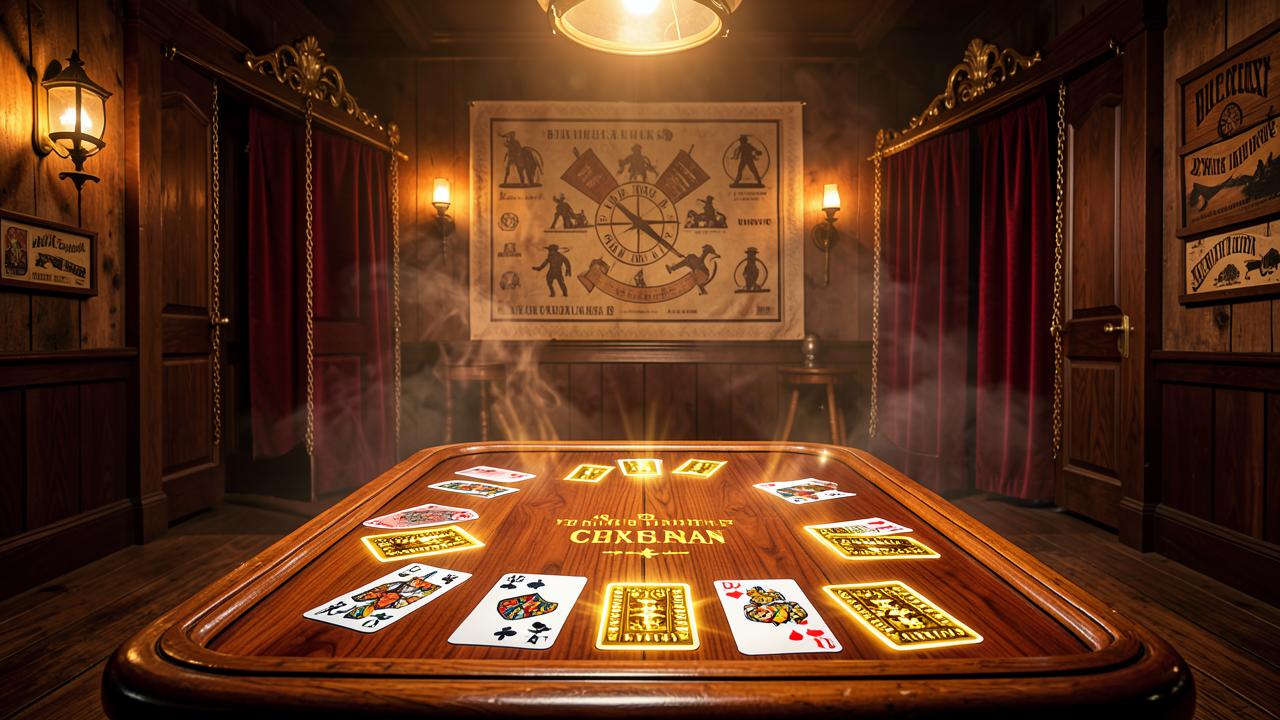
That sounds incredibly basic, and underneath all the cowboy theatrics it is. You place your bets across a grid containing the 52 standard playing cards, with the option to back individual cards or cover selections by rank or suit. The presenter then begins dealing from a special 104 card deck containing 52 ordinary cards and another 52 bonus cards.
The clever bit is that the first ordinary playing card ends the round, while any bonus cards appearing before it can increase the potential payout. There are 20x, 30x, 50x and 100x Multiplier cards, Double cards and Bounty cards capable of sending you into an interactive Bounty Hunt.
Your potential win begins at 20x, and every relevant bonus drawn before the eventual playing card can build that figure further. The longer the presenter keeps pulling bonus cards rather than an ordinary card, the more interesting the round becomes.
It's a really good use of suspense because normally you want the dealer to reveal your winning card immediately.
Here, if you've backed the Ace of Spades and another bonus comes out instead, you're quite happy for the dealer to keep digging.
For once, somebody taking forever to deal the cards can actually be good news.
The betting grid displays all 52 standard playing cards, giving you plenty of freedom over how much of the deck you want to cover.
You can bet directly on an individual card, such as the Ace of Hearts, or use the grid controls to cover broader selections. Selecting a rank places the chosen stake across all four cards of that value, while selecting a suit covers all 13 cards belonging to that suit. Evolution's rules also allow players to cover all cards.
That's a nice system because the underlying objective remains extremely simple while the betting grid gives you different ways of approaching it.
Once betting closes, the presenter begins dealing cards face up from the special deck.
If a bonus card appears, its effect is applied and the presenter continues dealing.
If a standard playing card appears, everything stops.
That card determines the winning selection and the accumulated potential payout is applied to any successful bets.
It creates an unusual situation where you're simultaneously hoping your card appears and hoping it doesn't appear quite yet.
Casino games are rarely this indecisive.
The special deck contains 104 cards in total.
Half are the familiar 52 card deck, while the other half consists entirely of bonus cards: 20 Multiplier cards worth 20x, 19 worth 30x, three worth 50x, one worth 100x, six Bounty cards and three Double cards.
That's important because bonus cards don't determine the final winning card. They simply modify the potential payout before another card is drawn.
A round can therefore be over almost immediately if a standard playing card comes straight out of the shoe, or it can continue through several bonuses before the eventual result appears.
Those longer sequences are naturally where Dead or Alive: Saloon becomes much more entertaining.
One ordinary card and we're done.
Three multipliers, a Bounty and a Double before the ordinary card?
Now we've got ourselves a proper shootout.
The most common bonuses are the Multiplier cards, which can carry values of 20x, 30x, 50x or 100x.
Rather than replacing the existing potential win, these values are added to it.
The round begins with a potential payout of 20x, so drawing a 30x Multiplier increases that figure to 50x. Another 50x would then take it to 100x, provided a standard playing card hasn't appeared in between.
I like the additive system because it makes consecutive bonus cards genuinely exciting. You're not simply waiting to see which single multiplier eventually applies. You're building a total as the dealer works through the shoe.
Every bonus card also means the decisive playing card has been delayed for another draw.
The longer the dealer avoids ending the round, the bigger the pot can become.
Suddenly “not my card” becomes surprisingly good news.
The Double card does exactly what you'd hope: it doubles the potential payout accumulated up to that point.
If your potential win has reached 50x and Double appears, it becomes 100x.
There's an important catch, though. The Double only applies to the amount accumulated at the moment it's drawn. Any multiplier cards appearing afterwards are added normally rather than being automatically doubled as well.
That makes the order of the bonus cards important.
A Double arriving after several multipliers is considerably more useful than seeing it very early, and another Double can potentially create an even more interesting sequence before the standard card finally appears.
It's a simple mechanic, but watching a healthy multiplier total suddenly double is probably the quickest way this particular saloon gets everyone's attention.
The Bounty Hunt is Dead or Alive: Saloon's proper interactive bonus event.
When one of the six Bounty cards appears, the main card game temporarily gives way to a Wild West shooting sequence where you're presented with three hidden targets containing multiplier values.
You choose one of the three targets, take your shot and reveal the multiplier hiding behind it. That value is then added to your current potential win, after which the game returns to the card draw.
This is probably my favourite feature because it gives the player something to actually do.
Most of the game is understandably passive. You choose your cards before the round and then watch the presenter deal. Bounty Hunt suddenly gives you a decision and makes the bonus feel like a genuine event rather than simply another multiplier card emerging from the shoe.
Your choice obviously doesn't reveal where the largest multiplier is hiding, but that doesn't stop you feeling personally responsible when you shoot 10x and discover 100x sitting behind the bloke next door.
There's always one outlaw you should have shot instead.
What really makes the feature system work is that multiple bonus cards can appear during the same round.
Multipliers accumulate, Bounty values can be added and Double cards can increase whatever has already been collected before the eventual standard playing card finally brings proceedings to an end.
That means the bonuses aren't isolated little events. They interact with one another and create increasingly valuable sequences.
It's also why the game can be entertaining despite having such a simple underlying objective. The interesting question gradually changes from “which card will appear?” to “how much can we build before a card appears?”
A long bonus sequence can turn an otherwise completely ordinary card prediction into a much more dramatic result.
The only problem is that eventually somebody has to draw a playing card.
Every saloon closes eventually.
Dead or Alive: Saloon manages to make an incredibly simple prediction game much more interesting than it initially sounds.
The betting grid gives you plenty of flexibility because you can concentrate on individual cards or spread your bets across ranks and suits. It's immediately understandable, yet there's enough choice to stop every player approaching the game identically.
The real strength is the way the result develops.
A standard card can end proceedings immediately, but every bonus appearing first keeps the round alive and potentially increases the payout. That completely changes your relationship with each draw because delaying the final result can actually be desirable.
I also like how transparent everything is. You can see the current potential win increasing as Multiplier, Double and Bounty cards appear, so there's a clear sense of progression rather than a complicated calculation happening somewhere behind the scenes.
There's very little strategy once betting closes, with Bounty Hunt providing the only meaningful interaction during the round. You're mostly watching the cards determine your fate.
But the escalating potential payout creates enough tension that being a spectator rarely feels completely passive.
Score 8.4/10
The bonus system is easily the strongest part of Dead or Alive: Saloon.
Multiplier cards provide the foundation, but allowing their values to accumulate rather than simply replacing one another means consecutive bonuses can become increasingly valuable.
Double is even more interesting because timing matters. Seeing it after several Multiplier cards can dramatically increase the potential payout, while an early Double is naturally less exciting.
Bounty Hunt then gives the feature package something completely different. Instead of another card automatically adding a value, you're taken into an interactive Wild West sequence and choose which target to shoot.
More importantly, these mechanics can all occur during the same round.
A couple of Multiplier cards followed by a Bounty and then a Double creates a completely different experience from a round where the first card out of the shoe is an ordinary playing card.
That's good feature design because the bonuses don't simply exist alongside one another.
They build on each other.
Score 8.8/10
Dead or Alive: Saloon absolutely commits to its Wild West setting.
Evolution built the game around a dedicated saloon environment rather than simply placing some wooden panels behind a conventional card table. The lighting, props, betting interface and presenter styling all work together to create something that feels much closer to a casino game show than an ordinary card draw.
The Bounty Hunt is particularly effective because it lets the production leave the card table behind and properly embrace the theme. Choosing a target and taking a shot fits naturally into the Wild West setting rather than feeling like a generic bonus that's been dropped into the game because somebody wanted another multiplier.
The presenter also has plenty to work with. Every new bonus card extends the round and builds the potential payout, giving the host natural moments to react to rather than simply dealing one card after another.
Individual presenters rotate, so as with the other games we've reviewed, I'm rating the presenter format rather than whoever happens to be hosting a particular session.
The only slight issue is that the theatrics can feel disproportionate when a round ends on the first ordinary card.
You've walked into this beautifully constructed Wild West saloon ready for a shootout.
The dealer turns over a seven.
Everybody goes home.
Score 9.0/10
Dead or Alive: Saloon is one of Evolution's more unusual card based live games.
Predicting a playing card obviously isn't remotely new, and neither are multipliers. What feels much more distinctive is constructing a deck where bonus cards can repeatedly delay the actual result while simultaneously increasing its potential value.
The sequence itself becomes the game.
Instead of triggering a bonus after the main result, Dead or Alive: Saloon effectively puts the bonuses before the result and keeps asking how many can appear before an ordinary card finally ends everything.
Bounty Hunt adds another layer by moving into an interactive Wild West event, while Double makes the order in which the special cards appear relevant to the eventual payout.
Evolution described the game ahead of release as a new live title featuring an immersive Wild West bounty hunt event, and it certainly feels different from the company's usual roulette wheels, dice games and game show formats.
It isn't complicated for the sake of being different either. You can explain the basic game in about thirty seconds.
Pick a card.
Hope the dealer doesn't draw it too quickly.
That's a surprisingly original sentence for a casino game.
Score 9.0/10
Overall Rating
8.7/10
Dead or Alive: Saloon takes a very basic card prediction and surrounds it with one of Evolution's more cleverly structured bonus systems.
The special deck contains 52 standard playing cards and 52 bonus cards, and the objective is simply to predict which standard card will appear first. You can bet on individual cards or use broader rank and suit selections to cover several positions at once.
Where the game becomes interesting is everything that can happen before that final card appears.
Your potential payout starts at 20x, with Multiplier cards adding 20x, 30x, 50x or 100x as they're drawn. Double cards multiply whatever you've accumulated up to that point, while Bounty cards interrupt proceedings with an interactive shooting event where you choose one of three targets to reveal another multiplier.
Multiple bonuses can appear during the same round, which creates some excellent sequences. A couple of Multiplier cards followed by a Bounty Hunt and then a well timed Double can transform the potential payout before the eventual playing card has even appeared.
Of course, there's another side to that.
Sometimes the first card dealt is a normal playing card and the entire Wild West adventure is over almost before you've settled into your saddle. That's the unavoidable consequence of building the game around bonus cards delaying the final result.
The Bounty Hunt is my favourite part because it gives the player some involvement after the initial betting phase. Most of the game is understandably passive. You choose your cards before the round and then watch the presenter deal. Bounty Hunt suddenly gives you a decision and makes the bonus feel like a genuine event rather than simply another multiplier card emerging from the shoe.
Presentation is excellent too. Evolution has gone properly Wild West with the saloon studio and Bounty Hunt sequence, and the theme actually makes sense alongside the mechanics rather than simply providing a different background.
The game's published RTP is 97.02%, which is confirmed in regulatory and operator Evolution game documentation and independent mathematical analysis of the 104 card structure.
Dead or Alive: Saloon ultimately works because you're not simply waiting for your winning card.
You're hoping the game takes the scenic route before it gets there.
The longer the dealer keeps your card in the holster, the bigger this particular shootout can become.
Immersive Roulette
Instant Roulette
Auto Roulette
Dragon Tiger
Side Bet City
Super Sic Bo
Live Craps
Speed Roulette