Evolution · Riga, Latvia · 1,000,000x top multiplier
Format
Bingo show
RTP
95.4
Top multiplier
1,000,000x
Wheel segments
n/a
Betting window
15s
Table min
n/a
Table max
n/a
Loading live stats
Mega Ball is a live casino game show from Evolution, released in April 2020, which takes the familiar mechanics of bingo and a lottery draw before adding a multiplier-heavy finale. Instead of betting on a wheel or choosing between different outcomes, players purchase numbered cards and watch a physical ball machine draw 20 balls from a pool of 51, hoping to complete as many lines as possible.
Each card uses a familiar 5x5 bingo-style grid, with matching numbers automatically marked as they're drawn. Complete a horizontal, vertical or diagonal line and you've got a winning card, with the payout increasing considerably as more lines are completed.
The twist comes after the normal draw has finished. A Mega Ball multiplier between 5x and 100x is generated before another numbered ball is drawn. If that Mega Ball completes a winning line, the corresponding card payout receives the multiplier, and some rounds can even produce a second Mega Ball and another opportunity to improve the result.
It's an extremely easy concept to understand, particularly if you've ever played bingo. Evolution hasn't tried to reinvent numbered balls; it has simply made them considerably shinier, put them in a television studio and attached a multiplier machine capable of turning an otherwise modest line into something much more interesting.
The result sits somewhere between bingo, lottery and a casino game show. There's virtually no player interaction once the balls start flying, but watching several promising cards develop at the same time can be surprisingly engaging.
Apparently bingo night just needed better lighting.
Before each round you choose the value of your cards and how many you want to purchase. Evolution's current game allows card values starting from €0.10 and provides quick-purchase options for 1, 10, 25 or 100 cards, with as many as 400 cards permitted in a round.
Once betting closes, the physical machine begins drawing 20 of the 51 numbered balls in quick succession. Any matching numbers are automatically marked across all your cards, so thankfully there's no requirement to frantically dab hundreds of virtual bingo sheets while trying to keep up.
You're looking to create lines of five matching positions horizontally, vertically or diagonally, with each card offering multiple possible winning lines. The more lines completed on the same card, the larger the base payout becomes.
Evolution's interface does a particularly good job of handling what could otherwise become a complete mess. Your cards are automatically sorted according to how close they are to winning, while the numbers you need are highlighted alongside the potential payout.
That's important because Mega Ball becomes much more entertaining when you know exactly what you're waiting for. Rather than staring at dozens of numbers and hoping something useful is happening somewhere, you can see that another 17 or 42 would complete a line and immediately become invested in the next ball.
There aren't conventional betting positions in Mega Ball. Your decisions are simply how much each card is worth and how many cards you want to buy, with every card receiving its own randomly generated collection of numbers.
Playing additional cards naturally gives you more combinations to follow, but every extra card is another wager rather than a free increase in your chances. There's also a point where buying hundreds of cards stops feeling like bingo and starts looking suspiciously like spreadsheet management.
Fortunately, Evolution does most of that work for you. Cards are automatically marked and reordered during the draw, meaning the most promising ones rise to the top while the interface highlights exactly which numbers could produce a win.
I like that system because it lets players decide how busy they want the game to become without making larger quantities of cards impossible to follow.
Winning Lines provide the foundation of Mega Ball's payout structure. Complete one line and there's a basic return, while getting two, three, four, five or six or more lines on the same card increases the potential considerably.
That gives every card a nice sense of progression. Completing the first line doesn't necessarily mean you're finished with it because subsequent balls can continue filling the grid and potentially add further lines before the main draw ends.
The game also highlights the numbers needed for your next win, which makes the later stages of the draw much more interesting. A card sitting one number away from another line immediately gives you something specific to watch for rather than simply hoping each new ball is useful.
It's very traditional bingo underneath, but traditional bingo has lasted this long for a reason.
Once the initial 20 balls have been drawn, Mega Ball's headline feature begins.
A random Mega Ball multiplier between 5x and 100x is generated on the large studio display before another ball is drawn from those remaining in the physical machine.
If that Mega Ball completes a line on one of your cards, the payout for the card receives the displayed multiplier. If it doesn't complete a line, the number still behaves as an ordinary additional ball and can contribute towards the card, but it doesn't receive the multiplier.
This is where the game gets most of its excitement. You've already watched 20 balls gradually develop your cards and now one final number arrives with the possibility of turning the resulting payout into something considerably larger.
I particularly like that the multiplier is revealed before the Mega Ball itself. Knowing there's a 50x or 100x sitting there makes the subsequent draw much more important because you can already see which numbers would produce the big result.
Suddenly number 34 has never looked so attractive.
Some rounds include a second Mega Ball, providing another multiplier and another numbered draw after the first bonus has finished. Evolution's current rules confirm that either one or two Mega Ball bonus rounds can occur.
That gives cards another opportunity to complete a multiplied line and extends the most interesting part of the game rather than simply providing another ordinary ball.
There is an important restriction if both Mega Balls contribute to winning lines on the same card: only the highest applicable multiplier is used, rather than the two multipliers being added or multiplied together.
It's still a welcome second chance, particularly when the first Mega Ball sails straight past every number you were hoping to see.
Mega Ball is incredibly easy to play, but there's more tension in watching the cards develop than the simple rules initially suggest.
The 20-ball main draw moves quickly and the interface does an excellent job of showing which cards are getting close to another line. That's probably the most important part of the design because manually following a large collection of 5x5 cards would become exhausting very quickly.
Instead, the strongest cards move into view and the numbers needed for potential wins are highlighted. Once you're one number away from completing another line, every new ball has an obvious purpose and the draw becomes considerably easier to become invested in.
Being able to choose anything from a single card to hundreds also makes Mega Ball quite flexible. You can keep things extremely simple or have numerous cards active simultaneously without needing to manually monitor every position.
The obvious weakness is the lack of meaningful decisions once the draw starts. Unlike Cash or Crash, where you're repeatedly deciding whether to continue, Mega Ball essentially becomes a spectator sport as soon as betting closes. The machine draws the balls and the software handles everything else.
For a bingo-style game that's perfectly understandable, but it limits how involving the gameplay can ultimately become.
Score 7.9/10
Mega Ball doesn't have many features, but its headline multiplier mechanic is extremely effective.
The decision to generate the multiplier before drawing the Mega Ball is particularly important. Seeing 5x is useful; seeing 100x immediately changes the atmosphere because you know the next number has considerably more potential attached to it.
Having the Mega Ball still function as an ordinary additional number when it doesn't complete a multiplied line is sensible too. The draw isn't completely wasted simply because it failed to produce the ideal result.
The possibility of a second Mega Ball adds another layer and gives you another opportunity to find the number you're waiting for, although the multipliers don't stack when both contribute to the same card.
Compared with newer game shows, the feature package is admittedly quite thin. There's no separate interactive bonus game or modifier operating during the initial 20-ball draw, and most of the excitement is deliberately saved for the final Mega Ball stage.
It works, but I'd have liked one more mechanic affecting the main draw itself.
Score 8.0/10
Evolution has done a good job of making a numbered-ball draw feel like a proper live casino production.
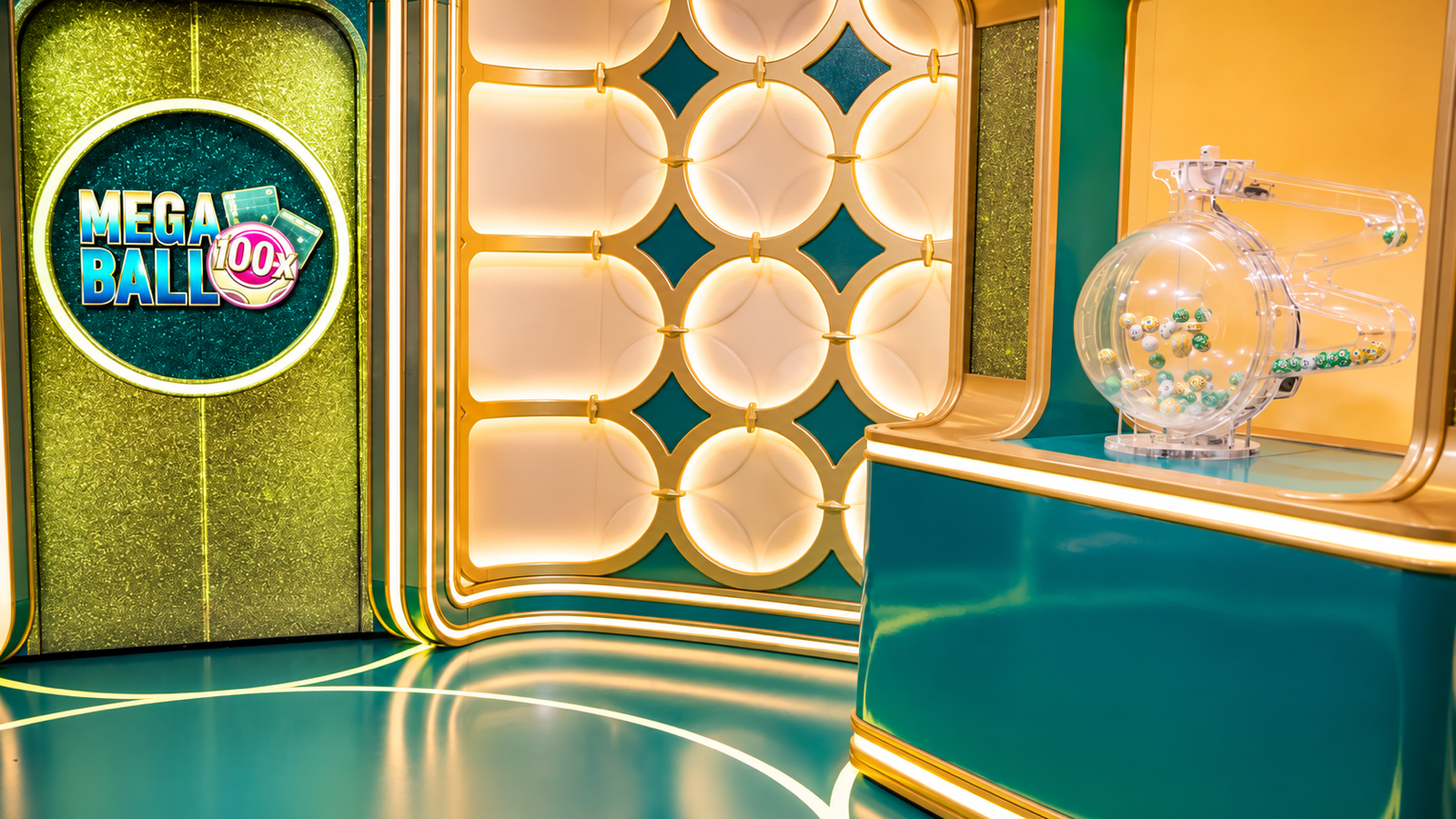
The custom-built physical ball machine provides the focal point while the large multiplier display dominates the studio when the Mega Ball stage begins. The balls are drawn quickly enough that the game doesn't become bogged down, and the interface handles the potentially overwhelming number of active cards extremely well.
That user interface deserves particular credit. Cards automatically reorganise according to their potential, matching numbers are marked instantly and the numbers required for the next win are clearly highlighted. Evolution's current rules even show the potential amount you could win if one of those required balls appears.
The presenter-led format suits the game without needing the host to dominate proceedings. Individual presenters rotate and shouldn't influence the permanent score, but having somebody running the physical draw gives Mega Ball more personality than an automated lottery machine producing the same results.
Visually, it isn't remotely as ambitious as MONOPOLY Live or Balloon Race. There are no elaborate 3D worlds or dramatic transitions into completely different bonus environments, but Mega Ball doesn't really need them.
It's bingo in its best clothes rather than bingo pretending to be an action film.
Score 8.2/10
Mega Ball is built almost entirely from ideas that existed long before Evolution arrived, but the combination works better than the individual ingredients suggest.
Bingo cards obviously aren't new, numbered ball machines aren't new and multiplier mechanics certainly aren't new either. Evolution itself described Mega Ball at launch as combining elements of bingo, lotteries and slots, rather than pretending it had invented any of them.
The clever part is the structure. Twenty rapid draws gradually develop the cards before the game switches attention to a randomly generated multiplier and one potentially crucial final ball. That creates a natural climax without requiring an unrelated bonus game to suddenly appear.
It was also Evolution's first bouncing-ball and lottery-style live game show, which deserves some historical credit within its own portfolio.
I wouldn't call the mechanics revolutionary, but Mega Ball finds a distinctive way of presenting some extremely familiar gambling concepts.
Bingo met the lottery, invited a slot machine along and somehow everybody got on.
Score 7.8/10
Overall Rating
8.0/10
Mega Ball succeeds by taking the familiar satisfaction of watching a bingo card gradually fill and giving the final number considerably more importance.
The main game couldn't be much easier to understand. Purchase your cards, watch 20 of the 51 balls emerge from the physical machine and hope enough numbers match to complete one or more lines. More completed lines on the same card increase the payout, while Evolution's interface automatically handles all the marking and brings your most promising cards into view.
That last part is more important than it sounds. With the current game allowing as many as 400 cards, following everything manually would be completely impractical. Automatically highlighting the numbers needed for another win means you always have something specific to look for when the next ball appears.
The Mega Ball finale is where the game earns its name. Once the first 20 balls have been drawn, a random multiplier between 5x and 100x is generated before another ball emerges from the machine. If that number completes a winning line, the corresponding payout receives the multiplier, while some rounds provide a second Mega Ball and another opportunity to improve the result.
What Mega Ball lacks is interaction. Your important decisions are finished before the first ball is drawn, so there's nothing comparable to the cash-out choices in Cash or Crash or the interactive bonus rounds found in some of Evolution's more elaborate game shows. You're watching your cards develop rather than influencing what happens to them.
The published rules we've found put optimal theoretical RTP at 95.40% for one card, with an overall stated range of 94.61% to 95.40% depending on play. That's noticeably lower than some of the game shows we've reviewed, so it's worth mentioning rather than hiding the figure among all those multipliers.
Evolution's original launch material advertised the possibility of wins reaching 1,000,000x the bet through the Mega Ball multiplier system, although payout limits and the precise paytable should always be checked within the current operator version.
Mega Ball isn't mechanically deep and doesn't pretend otherwise. The main draw is fast, the cards are exceptionally easy to follow and the Mega Ball gives every round a proper finale, particularly when a large multiplier appears and several of your cards are sitting one number away from another line.
It's essentially bingo after somebody discovered the multiplier button — and sometimes that's all an old game needs.
Overall Rating: 8.0/10.